
My Mine is live
A mining game where every move lands on-chain. What it is, what it isn't, and how to start.
My Mine is live. Open the app. There's a new tab sitting next to your quests, and if you're on the waitlist it's already yours.
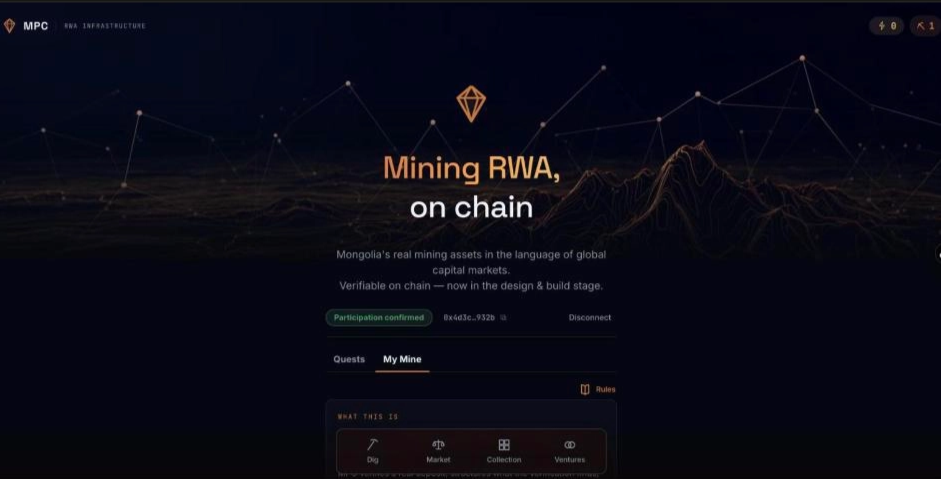
The mine sits where the quests are. Same board, second tab.
What it actually is
A mining game where every move you make lands on opBNB, signed by your own wallet.
Here's why it exists. MPC verifies a real deposit, structures what the verification turns up, then connects it to the rails that issue and manage the asset. My Mine runs those same stages as a game. Dig ore. Refine it. Assay it. Ship it.
The game is the business, playable. That's the whole pitch, and we're not claiming anything past it.
Every dig is a draw. Every rate behind every draw is published before you spend a thing.
Getting in takes a minute
No separate site. It's a tab, and it unlocks once you're a waitlist member. Wallet connected, signed in, Telegram and X done, email verified, badge claimed. No waitlist, no tab.
First press is the crossing. A short read, then a few questions. All of them have to land, and a wrong answer just gets answered again. Nobody's locked out for guessing.
Pass and your membership cert mints straight to your wallet. Add opBNB to your wallet before that step. You won't need a balance in it, which brings up the question everyone asks first.
Zero cost, zero blind signing
Every action is two-sided. Your wallet signs typed data, so you read exactly what you're approving. Our server co-signs. A relayer broadcasts it and a paymaster eats the gas.
Your balance never moves. That's not a campaign we're running. It's how the thing is wired, and it stays that way.
While we're here. MPC never asks for your recovery phrase, and never asks you to send anything anywhere. Anything that does isn't us.
Energy is the one thing that takes planning
Digging burns energy. Three per dig, twenty digs a day.
Here's what catches people. You don't earn energy in the mine. You earn it on Quests, from the daily check-in and the quests themselves. Those settle on BNB Smart Chain. The mine runs on opBNB. Two chains.
So there's a converter at the top of the mine. BSC balance on one side, Pickaxe Energy on the other. Two things before you move anything. It can take a few minutes to land on opBNB, and right now it's one way. What you convert doesn't come back.
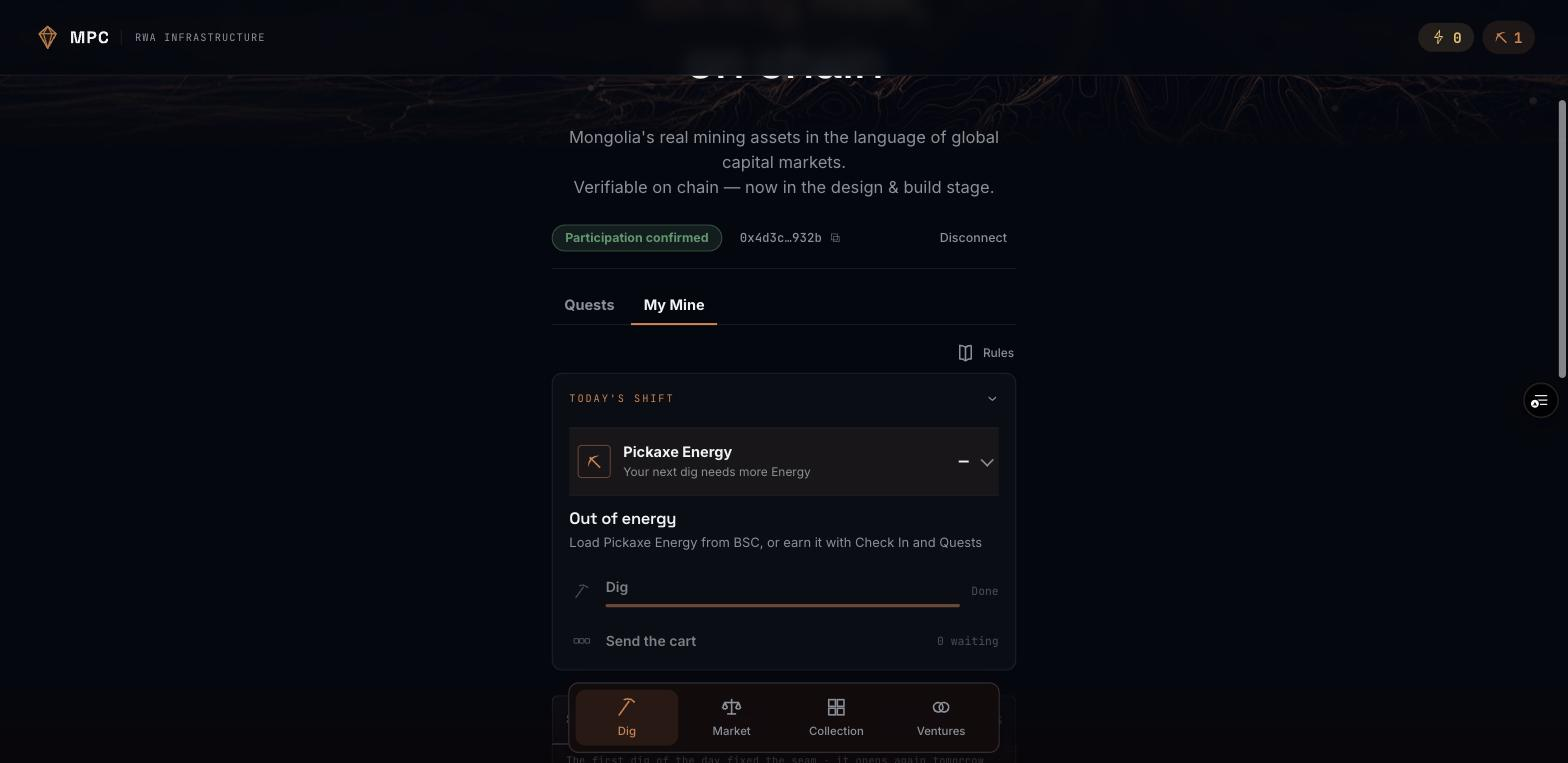
Out of energy, and the panel says so plainly rather than greying a button out.
Ten records a day
The day rolls at UTC midnight, built around four things we call acts. The cart takes your dug ore out of the pile and records it. The line is a refining shift. The assay office signs off on what a good actually is. The ship sends finished goods out to trade.
Each runs twice a day. Add the check-in and the credit claim, one each, and that's ten records. That's the ceiling. One record batches many actions, so you're never paying a write per item.
Everything else is free. Load the hold, mark ore, change your mind. None of it writes, none of it costs you a run.
The one rule people get wrong
Three seams: Silicon, Lithium, Rare earth.
Your first dig of the day fixes the seam, and the odds follow that choice. Whichever seam you fixed draws at sixty percent. The other two, twenty each.
So if the screen shows Silicon at sixty, Silicon isn't special. That's just where you dug first today. Fix Lithium tomorrow and the sixty follows it. One decision a day, worth two seconds before you click.
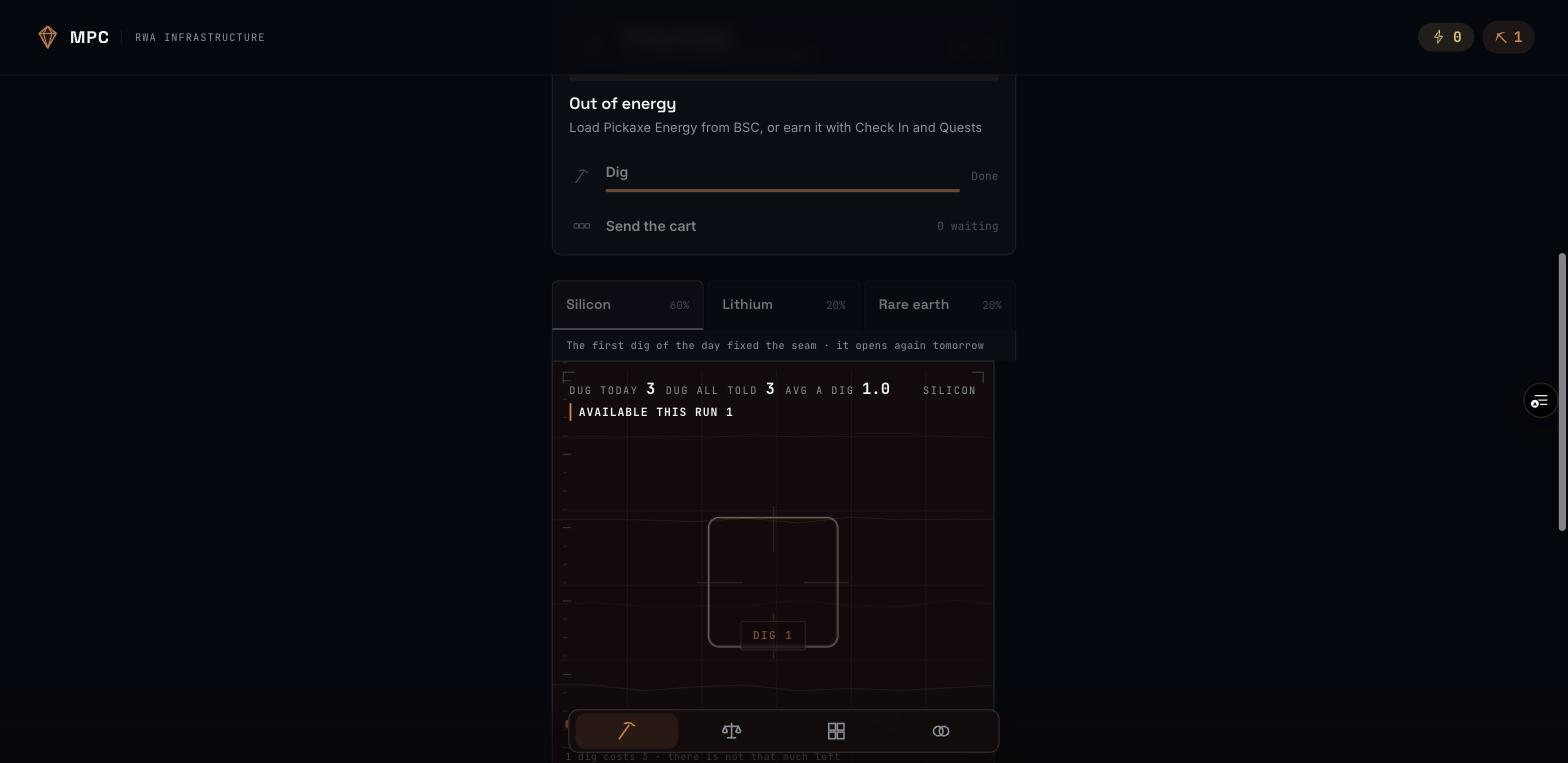
The odds sit on the tabs. The sixty belongs to the seam you fixed, not to a favourite.
Nothing is real until you send the cart
Dug ore sits in a pile, and the pile says exactly what it is: pending, not on-chain. We could have hidden that. We didn't. A pile isn't a record, and pretending otherwise is how people get burned.
Send the cart and one record covers the whole load plus the energy it burned. Receipt comes back on-chain, with the count. Don't want to carry something? Put it back in the ground, twenty at a time.
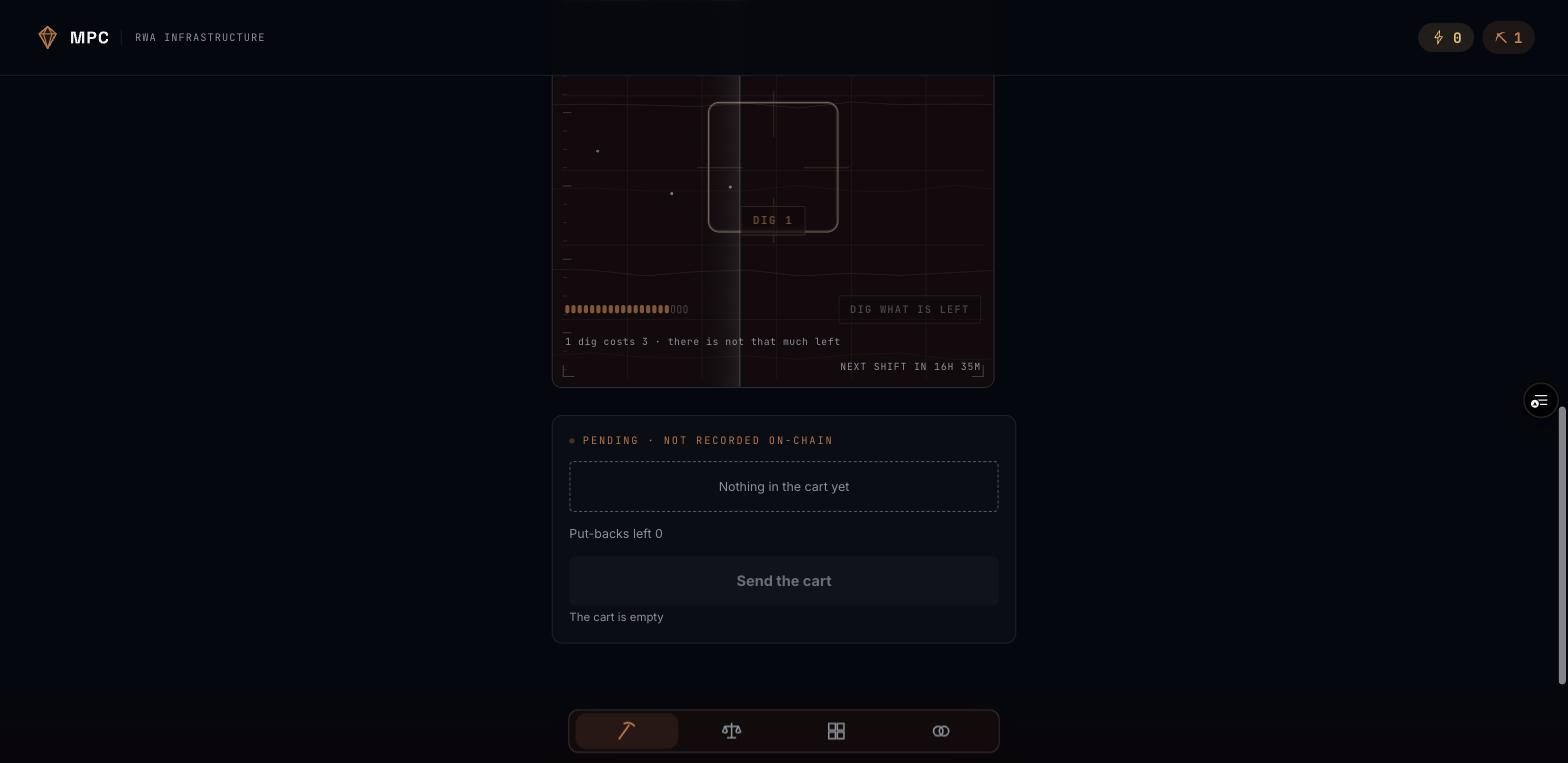
Six grades, three seams, and the sources underneath, including the one step that couldn't be confirmed.
You're not refining a generic token. You're taking lithium concentrate to lithium carbonate, to hydroxide, up to a battery cell. Silicon runs from metallurgical silicon to a finished module. Rare earth ends at a sintered magnet.
Those chains come from published sources, and the Rules screen cites them. Two US Department of Energy supply chain reports and a Congressional Research Service paper. It also names the single step it could not confirm against a primary source, which we left in rather than quietly rounding off.
A step up at the top adds fifty percent over what it consumed, so climbing beats hoarding. Goods you hold lend traits. A refine that takes four instead of five. Five C ore coming out a grade higher. Double energy on your check-in. Eight of them, and the odds climb steeply with grade. At C it barely fires. At SSS the best ones hit up to thirty percent.
The market is deliberately a bad shortcut
Register an ore and it pays credit over fifteen days, day by day, not in a lump. You can buy ore back with that credit, but only the bottom three grades, and at three times what registering paid.
That's on purpose. Buying your way up the ladder is meant to be the worst route available.
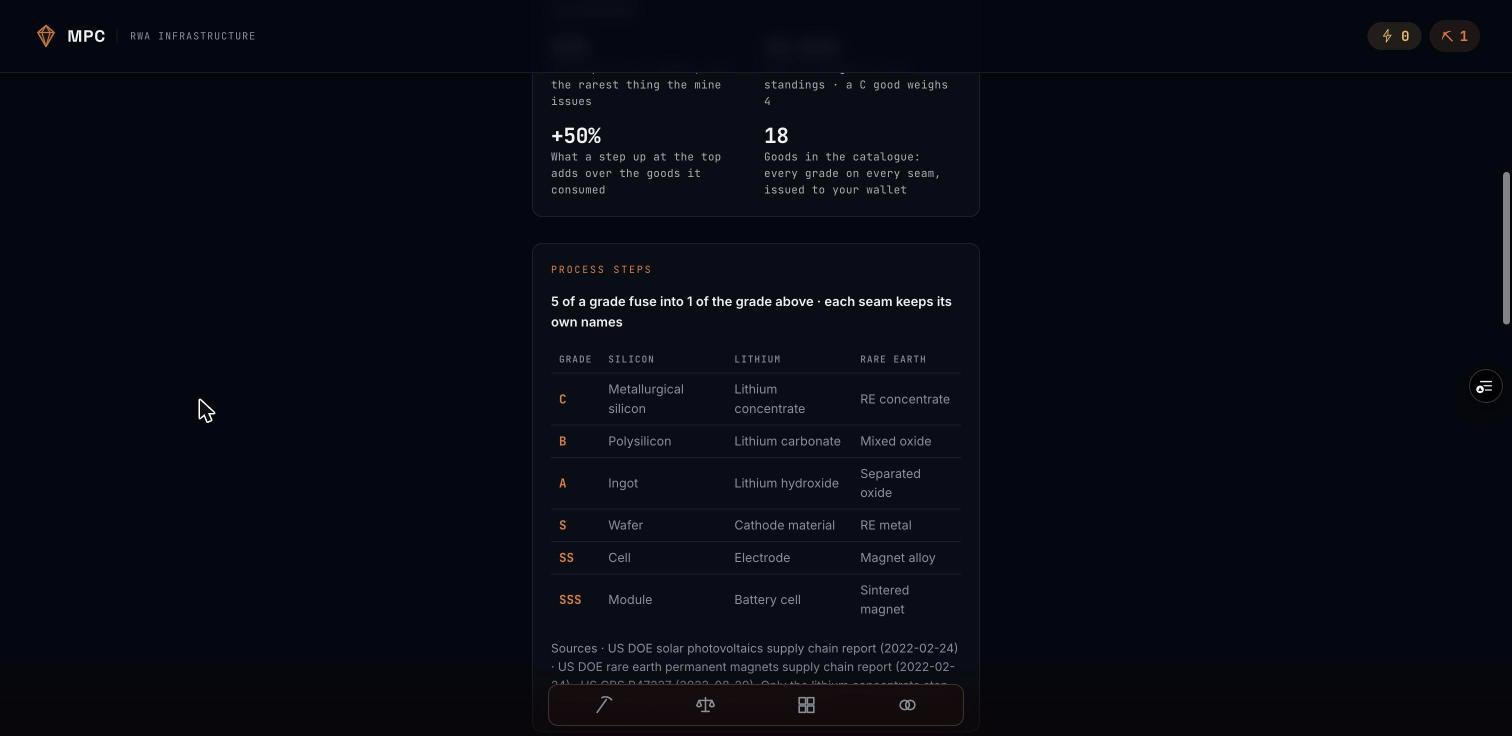
The books pay as days pass, which is why the claim is a once-a-day thing.
What you collect stays yours
Thirty-seven slots. Ore and goods, six grades across three seams, plus your cert. Eighteen goods in the catalogue itself. Anything you haven't held shows as a question mark with its grade, so you see the shape of what's missing without the spoiler.
Those goods are soulbound. The contract reverts on transfer. You can't sell them, nobody can take them off you. What you earn stays where you earned it.
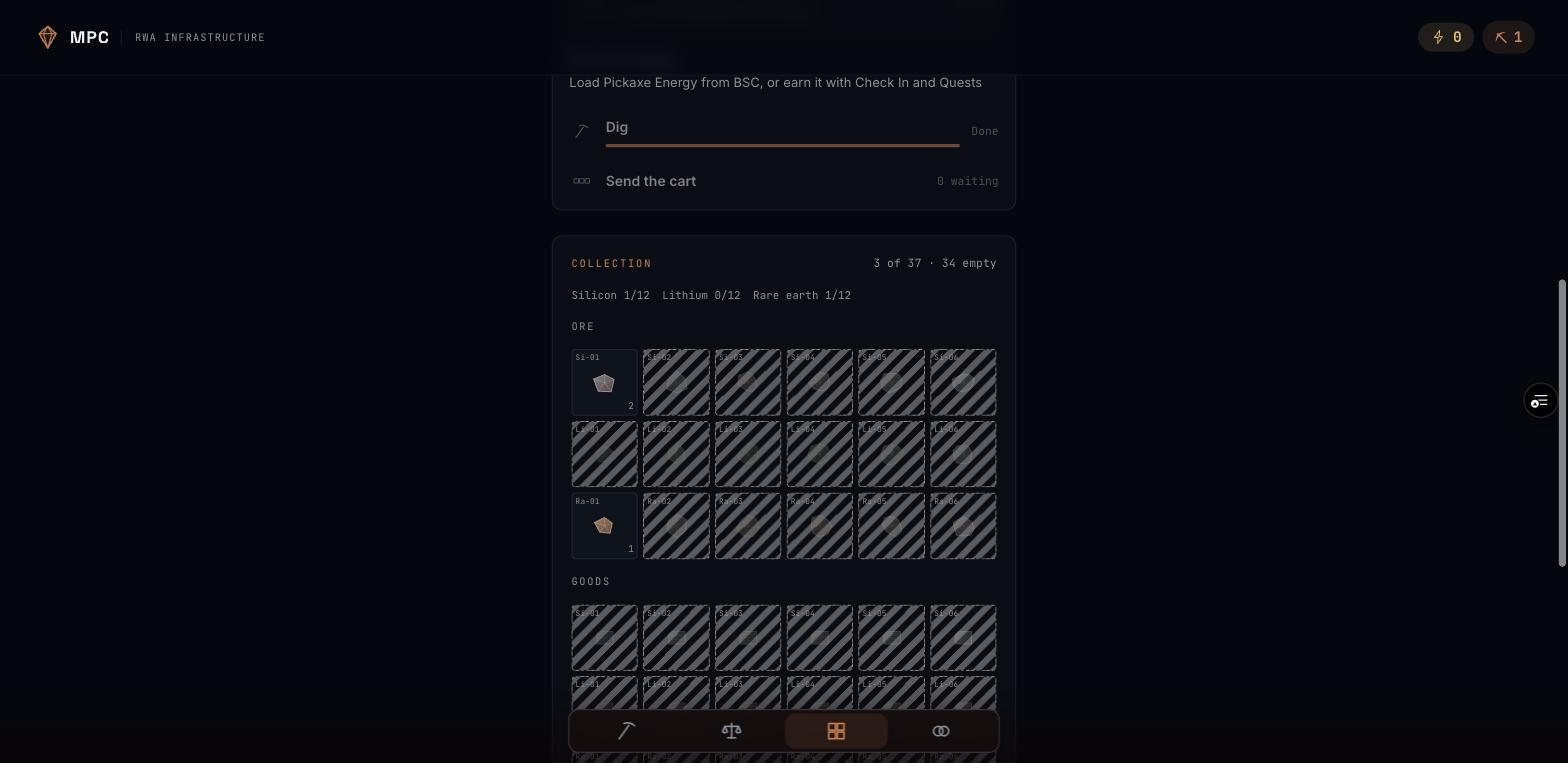
Three of thirty-seven. The empty slots tell you their grade and nothing else.
There's a referral layer too: Ventures. Partners who stand pay you in energy, in extra digs a day you keep, and in better odds on the top three grades. You can't invite yourself. If more than one invite exists, the first one kept is the one that counts, read from the chain rather than your browser.
Read the Rules screen first
Do this first. The link sits just above the shift panel.
Every number in this post is on it. Seam odds. Full traits table, every percentage at every grade. Every cap you're judged against. The sources behind the ladder. Nothing buried in a tooltip, nothing rounded to sound better.
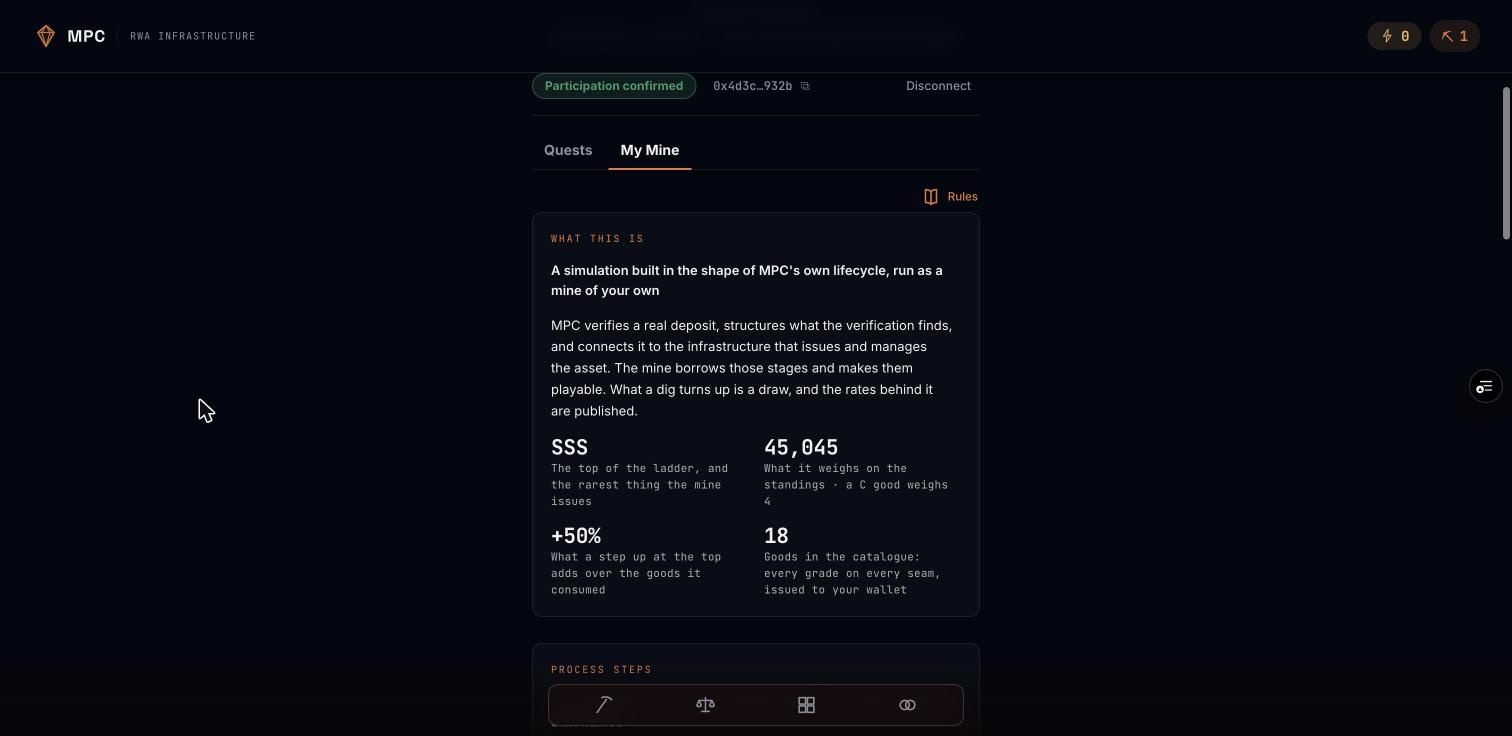
The mine explains itself before it asks you for anything.
— MPC Team, globalMPC
August 31, 2026