
Exploration Update: More Documentation from Tsagaan Tolgoi
Every exploration project starts with a question: what is actually in the ground?
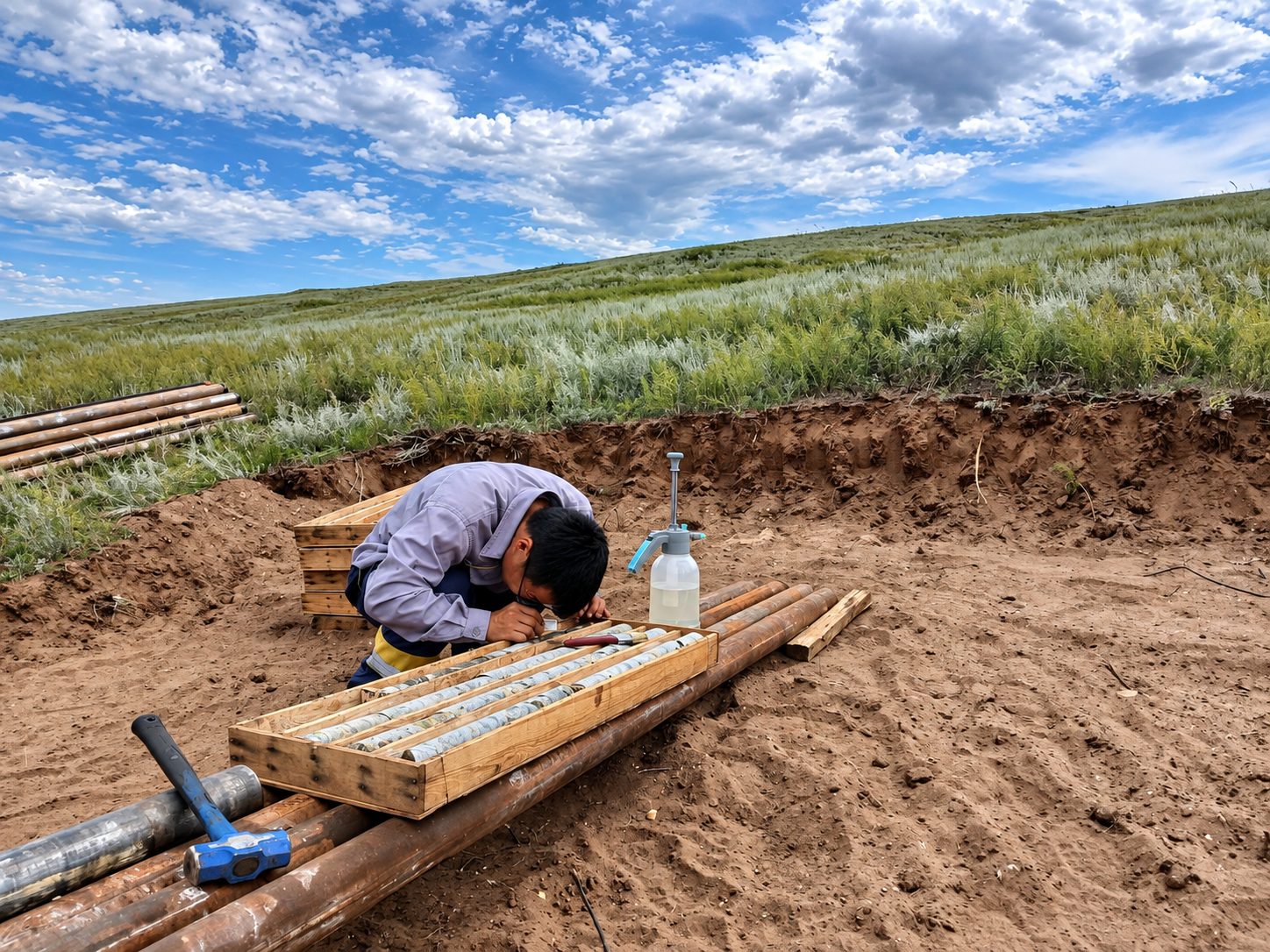
Every exploration project starts with a question: what is actually in the ground?
At Tsagaan Tolgoi, the latest exploration documentation shows teams working through the physical process of understanding the ground: examining exposed rock, measuring geological structures, collecting samples, recovering drill core, and preparing material for further analysis.
For MPC, this is where the story starts, because any later stage of the mining lifecycle would depend on understanding what exists beneath the surface.
Start With the Ground
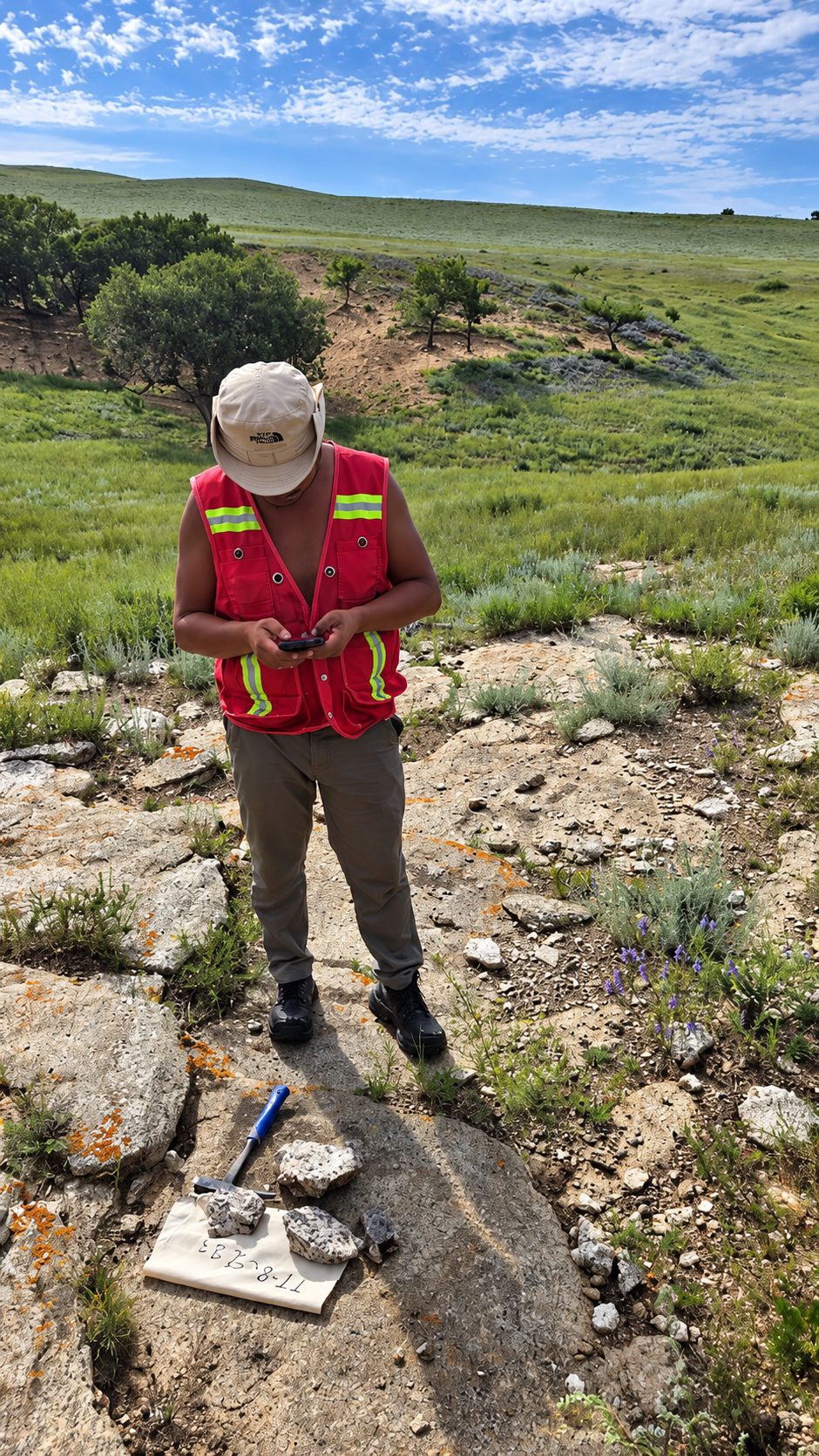
Exploration begins in the field, where geological observations are tied to specific locations and physical formations. At Tsagaan Tolgoi, workers are examining exposed sections of rock and soil while using measuring equipment to document the characteristics of what they encounter. These observations help establish how different geological features are distributed across the area and provide context for the samples collected during the exploration process.
The value of this work comes from connecting what is visible on the surface with a broader geological dataset. A measured outcrop can be recorded against its location, surrounding geology, and other observations from the area, giving the exploration team information that can be compared as more fieldwork is completed.
Bring the Ground Into the Analysis
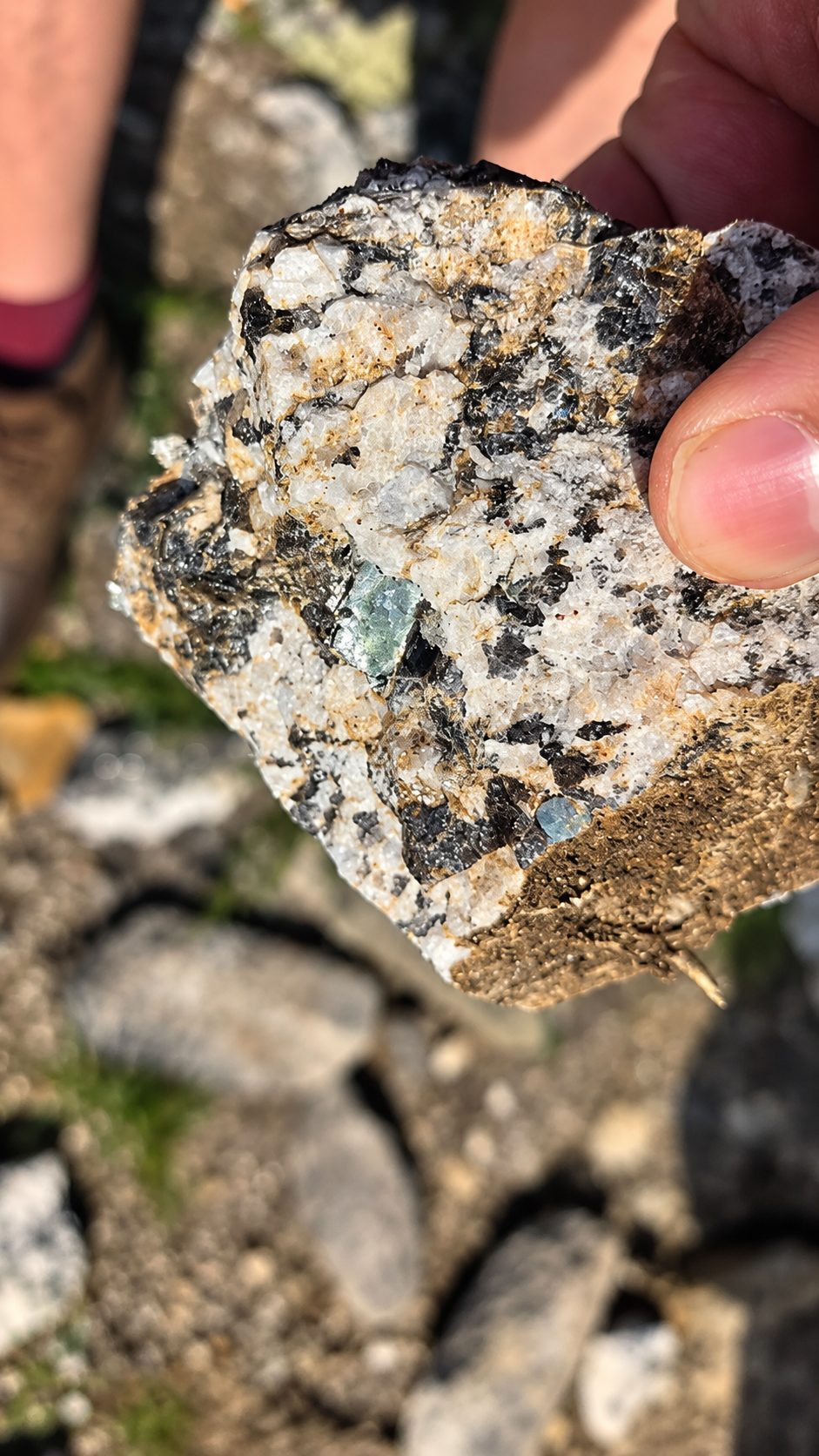
The next step is turning observations in the field into physical material that can be examined in greater detail. The latest photographs show rock samples with visible mineral textures, including dark areas and metallic-looking grains within lighter host rock.
Samples give the exploration team something concrete to study, compare, and test. Their texture, location, and relationship to surrounding geology can all contribute to a better understanding of the area, which makes sample collection one of the practical foundations of exploration.
Go Below the Surface
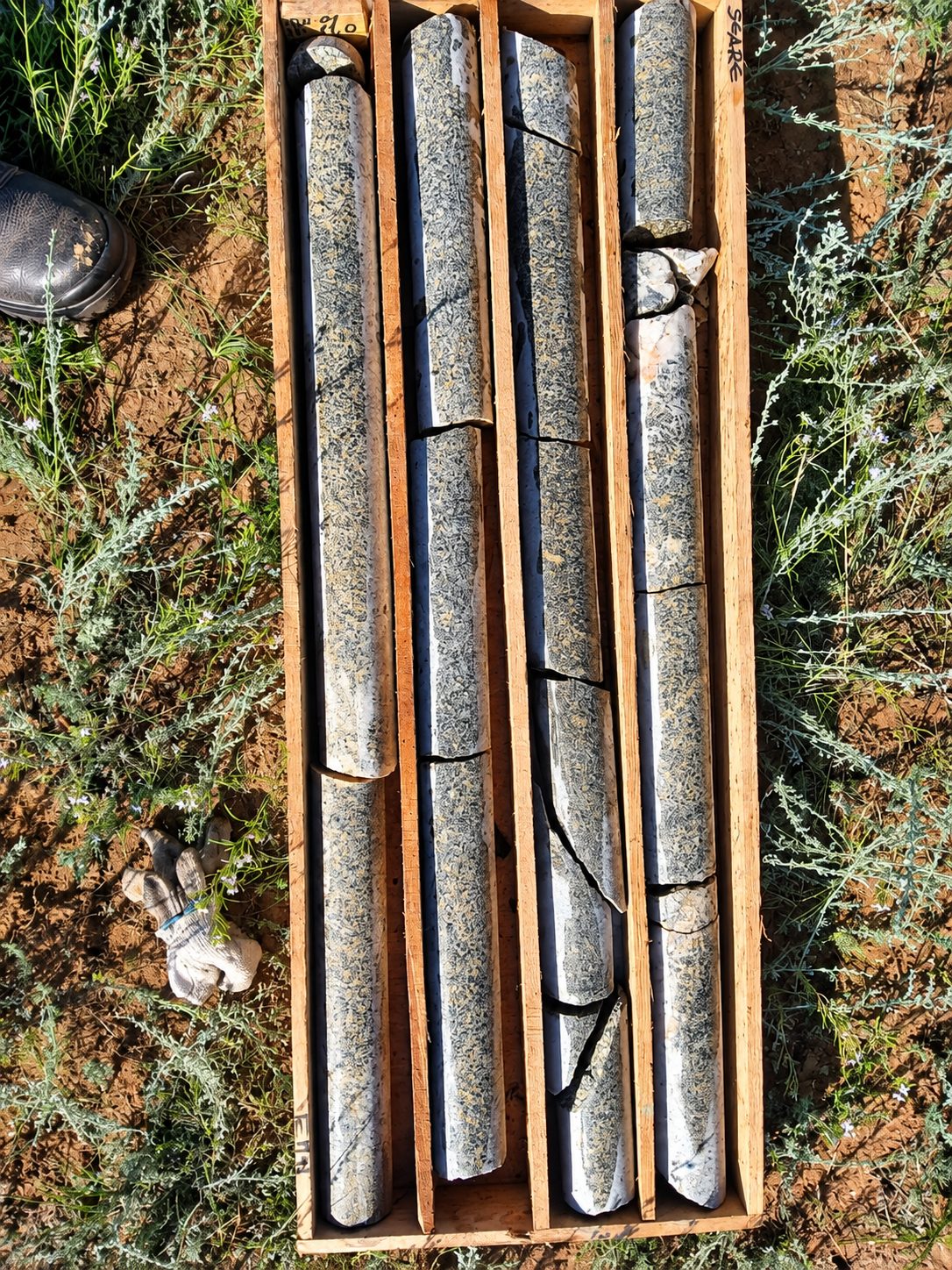
Surface observations provide only one view of the ground, while drilling gives the exploration team access to material that exists below it. The recovered drill core shown in the latest documentation has been placed into wooden core boxes, preserving sections of rock for inspection, recording, and further analysis.
Drill core allows geologists to examine changes in rock texture, fractures, alteration, and mineral occurrence across depth. The photographs also show field personnel inspecting the recovered core directly at the site, where observations can be recorded alongside the drilling activity and surrounding geological context.
This is where exploration starts connecting surface evidence with what is happening underground. Each recovered section extends the geological picture and adds another layer of information to the project.
Context Gives the Data Meaning
Exploration produces more than individual rocks and core samples. Teams also need to document where material was found, where measurements were taken, what structures surround it, and how different observations relate to one another across the project area.
A sample without its geological context tells only part of the story, while the same sample becomes more useful when its location, depth, surrounding formation, and relationship to other observations are recorded. As this information accumulates, the exploration team can build a more detailed picture of the ground and use that understanding to determine what further work should be carried out.
Why This Update Is Important for MPC
MPC is built around the idea that a mining case should be understood across its wider lifecycle, beginning with exploration and potentially progressing through development and mining, processing and refining, distribution and delivery, and eventually closure and restoration.
That perspective makes the exploration stage especially important. The activity happening at Tsagaan Tolgoi produces the physical observations and materials that form part of the exploration record, while any stages that follow would depend on what the project learns through that work.
The photographs therefore show more than people working in a field or pieces of rock arranged in boxes. They show the point where a mineral project is still being investigated, measured, and documented.
MPC's record continues with that fieldwork. Tsagaan Tolgoi remains at the exploration stage, and further documentation will be shared here as it is confirmed.
— MPC Team, globalMPC
October 16, 2026
Tsagaan Tolgoi
Mongolia- Location
- Mongolia
- Current stage
- Exploration
- Scale
- To be disclosed
- Timeline
- To be disclosed
- Stakeholders
- To be disclosed
- ExplorationSurvey and drilling to define the deposit.Current
- Development & MiningBuilding site access and extracting ore.
- Processing & RefiningConcentrating and refining raw ore.
- Distribution & DeliveryLogistics and offtake to buyers.
- Closure & RestorationDecommissioning and land rehabilitation.