
Gold Mineralization at Tsagaan Tolgoi
Mineral assets begin underground, long before they become financial products or digital assets.
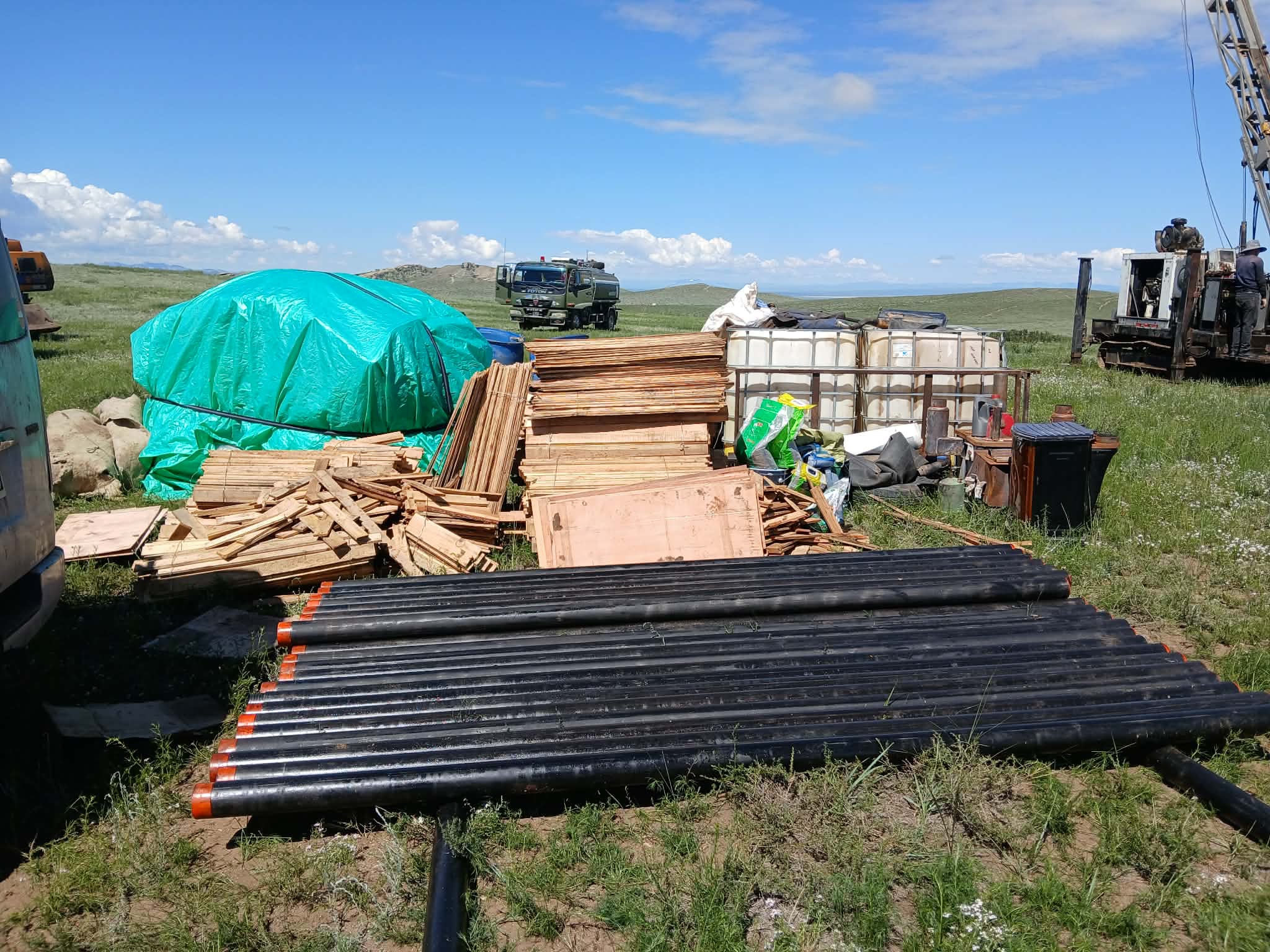
Mineral assets begin underground, long before they become financial products or digital assets.
At Tsagaan Tolgoi, recent exploration work is adding new geological evidence through drilling, laboratory analysis, geological interpretation, and geophysical surveys, giving a clearer view of what may exist beneath the surface.
For MPC, that process is where the RWA story starts. Before a physical mineral asset can move through a structured RWA framework, there has to be a real resource behind it and enough information to understand what is being developed.
The First Signal Came From TDH-03
One of the key drillholes at Tsagaan Tolgoi is TDH-03, located approximately 4 km northeast of the project camp. Drilling intersected a 50-meter-thick oxidized zone containing gold, while the geological interpretation also raises the possibility of a deeper gold source that requires further investigation.
A drillhole gives the exploration team a physical section through the ground that can be compared with surrounding geology and other exploration results. At Tsagaan Tolgoi, TDH-03 provides one of those reference points for understanding how the mineralized zones may continue beyond the area already drilled.
Looking Inside the Rock
The investigation went beyond what could be seen in the drill core. A sample collected from TDH-03 at 109 meters depth underwent optical microscopy and SEM-EDX analysis at the Mongolian University of Science and Technology.
The microscopic study identified copper minerals including chalcopyrite and covellite, while gold grains were found in pyrite. SEM-EDX analysis also identified gold in the sample, providing additional mineralogical evidence from the same drillhole.
This kind of analysis adds detail to the exploration picture because the team can examine not only where mineralization occurs, but also the minerals associated with it. Each result gives more information that can be compared against the wider geological setting.
The Gold-Bearing Zone Extends Beyond One Hole
The exploration work has identified a gold-bearing zone approximately 700 meters long, with gold-bearing quartz bodies shown extending north and south around the TDH-03 area. That broader footprint gives the project a much larger area to investigate than the original drill intersection alone.
TDH-07 was drilled along the same alteration zone and intersected a 30-meter-thick iron oxide alteration zone similar to the oxidized zone identified at TDH-03. Samples from TDH-07 were sent to SGS for further analysis, adding another set of data to the developing geological model.
With multiple exploration points now being investigated, the focus shifts toward understanding how these zones connect and what they could reveal about the underlying mineralized system.
More Targets Are Still Open
The current exploration program has also identified areas that require further investigation. A high-chargeability anomaly was identified east of TDH-03, and the geological work suggests that it could be associated with a sulfide-rich zone, although additional drilling and geophysical surveys are required to understand what the anomaly represents.
Potential placer-gold targets have also been identified along streams and channels within the project area. These zones remain exploration targets, with additional work required before their potential can be properly assessed.
This means the geological model is still developing as new data comes in. The next drillholes and assay results can add detail to the current interpretation, confirm existing observations, or point exploration toward new areas.
Where Tsagaan Tolgoi Fits Into MPC
A mineral asset generates a substantial amount of information before it can become part of an RWA structure. Drill data and samples provide the initial evidence, laboratory analysis adds mineral-level information, geological mapping provides context, and geophysical surveys help investigate what may exist below the surface.
MPC is building its RWA infrastructure around that asset lifecycle, with its framework moving from Resource to Structuring, then Tokenization and Capital Markets. Tsagaan Tolgoi is currently secured as the first MPC product, while the wider platform remains in the design and build stage.
That makes the underlying geological work directly relevant to the larger MPC model. The quality of the information surrounding the physical asset becomes part of the foundation for everything that can eventually be built around it.
Building From the Asset Up
The RWA conversation often starts with the question of how a physical asset can be represented digitally, but that question only makes sense once the physical asset itself has been investigated and documented. Tsagaan Tolgoi shows what that groundwork looks like in practice, from TDH-03 drilling and mineral analysis to the identification of a broader gold-bearing zone and additional exploration targets.
MPC is building around that same starting point by putting the real-world resource at the beginning of the asset lifecycle. The objective is to create a structured path through which real mineral assets can progress toward RWA issuance and, eventually, participation in capital markets.
Tsagaan Tolgoi is still being explored, and the geological picture will continue to develop as more results become available. For MPC, that ongoing work is part of the foundation for building a more structured connection between physical mineral assets and the digital RWA market.
— MPC Team, globalMPC
September 30, 2026
Tsagaan Tolgoi
Mongolia- Location
- Mongolia
- Current stage
- Exploration
- Scale
- To be disclosed
- Timeline
- To be disclosed
- Stakeholders
- To be disclosed
- ExplorationSurvey and drilling to define the deposit.Current
- Development & MiningBuilding site access and extracting ore.
- Processing & RefiningConcentrating and refining raw ore.
- Distribution & DeliveryLogistics and offtake to buyers.
- Closure & RestorationDecommissioning and land rehabilitation.