
Proof of Reserves vs Ore Reserve
Proof of reserves shows what a custodian holds; an ore reserve is the economically mineable part of a mineral resource. How they differ and why it matters.
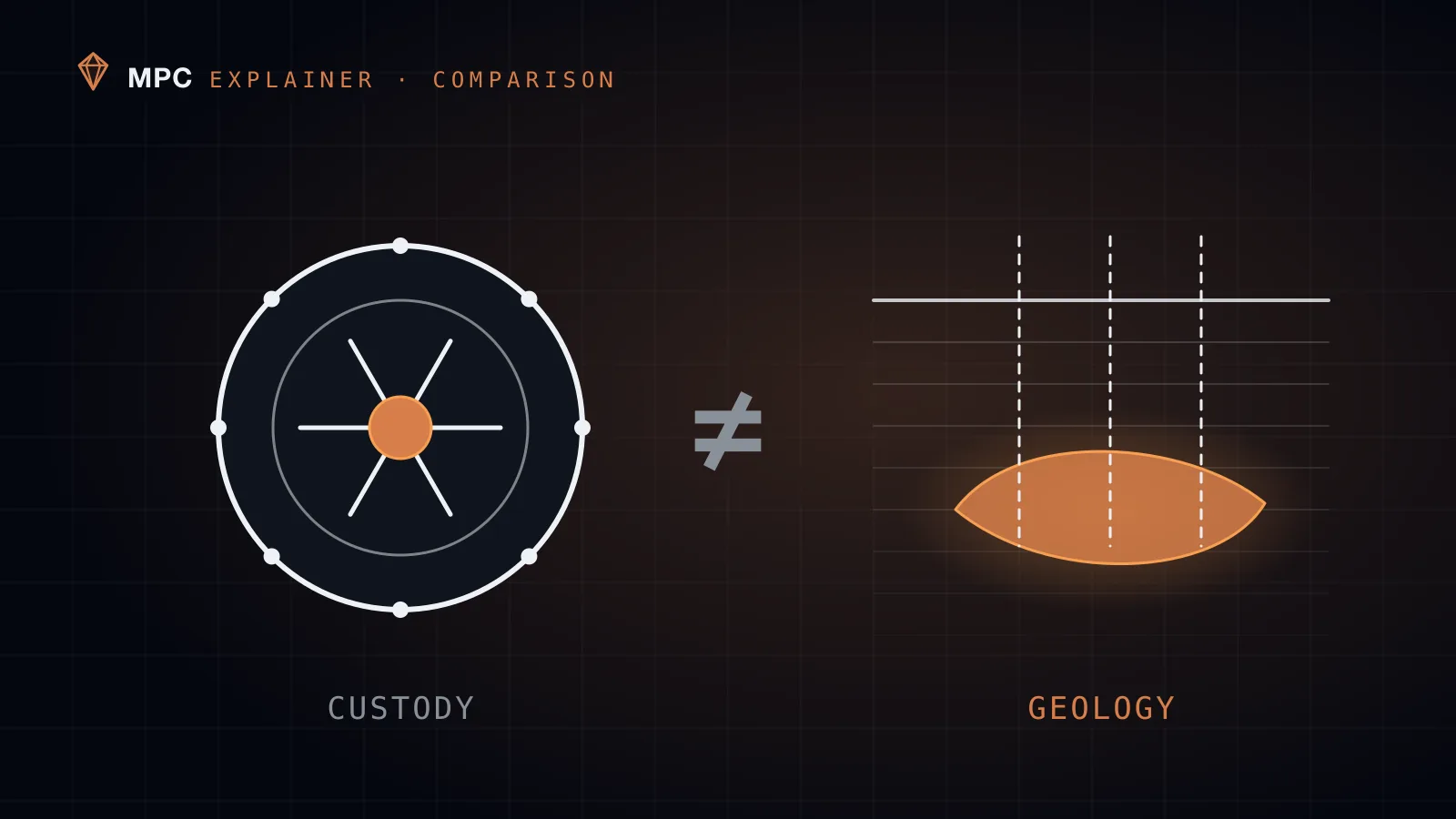
Proof of reserves and ore reserves describe different types of evidence. In crypto, proof of reserves concerns assets held by a custodian or issuer. In mining, an ore reserve is the economically mineable portion of a mineral resource. Knowing both definitions helps when reading tokenized asset claims and mining project documentation.
Mineral resource vs ore reserve
The terms mineral resource and ore reserve are basic to mining project evaluation. They describe different stages of geological knowledge and economic assessment.
What is a mineral resource?
A Mineral Resource is a concentration or occurrence of material of economic interest in or on the Earth's crust, in such form, grade, quality and quantity that there are reasonable prospects for eventual economic extraction. Its geological characteristics are estimated from exploration evidence, sampling and interpretation by appropriately qualified professionals.
A mineral resource is an estimate supported by geological information. Its classification reflects the confidence in the available evidence and the interpretation of the deposit. Mineral Resources can include deposits that have not yet shown economic viability through the technical and economic studies required for reserve classification.
What is an ore reserve?
An Ore Reserve is the economically mineable portion of a Measured or Indicated Mineral Resource after applying the relevant Modifying Factors, including mining, processing, metallurgical, economic, marketing, legal, environmental, infrastructure and other considerations.
A reserve estimate therefore requires technical and economic assessment beyond geological confidence. It is the portion of a resource considered economically mineable under the assumptions documented in the relevant technical study.
The JORC Code 2012 uses the term Ore Reserve, while the Canadian CIM standards and US SEC S-K 1300 use Mineral Reserve. The definitions share the same general principle, although their detailed reporting requirements differ.
The important question is how much is known about the deposit and whether there is enough technical and economic evidence to classify part of it as economically mineable.
Measured, Indicated, Inferred; Proved and Probable
Mineral resources are classified as Inferred, Indicated or Measured, in rising order of geological confidence. The categories describe the confidence in the geological evidence, sampling and interpretation behind an estimate.
The resource confidence ladder
1. Inferred: lowest geological confidence. An inferred resource is estimated from limited geological evidence and sampling. The information suggests geological continuity, but that continuity has not been verified to the level required for higher categories. An Inferred Mineral Resource cannot be converted directly into a Mineral Reserve under the recognised reporting frameworks.
2. Indicated: moderate geological confidence. An indicated resource has enough geological evidence and sampling to support a more confident interpretation of the deposit, and to support technical assessment and mine planning at the relevant level of detail. An Indicated Mineral Resource may be converted into a Probable Reserve after applying the relevant Modifying Factors.
3. Measured: highest geological confidence. A measured resource is supported by detailed exploration, sampling and testing. The information is reliable enough to support detailed mine planning and evaluation of economic viability. A Measured Mineral Resource may be converted into a Proved or Probable Reserve, depending on the framework and the evaluation results.
Resource and reserve classifications compared
| Classification | Geological confidence | Economic assessment | Can it become a reserve? |
|---|---|---|---|
| Inferred | Lowest | Insufficient for reserve conversion | No |
| Indicated | Moderate | Requires application of Modifying Factors | Yes, Probable |
| Measured | Highest | Supports detailed mine planning and economic evaluation | Yes, Proved (Proven) or Probable |
The conversion paths are:
- Inferred, Indicated and Measured are resource categories in rising order of geological confidence.
- An Indicated Resource can convert to a Probable Reserve.
- A Measured Resource can convert to a Proved (Proven) Reserve or a Probable Reserve.
This is a classification, not an automatic progression. Further exploration can support an upgrade between resource categories, but the outcome depends on the evidence and professional interpretation.
JORC uses Proved and Probable Ore Reserve. The CIM Definition Standards and SEC S-K 1300 use Proven and Probable Mineral Reserve. That is why "proven and probable reserves" appears in international mining discussions even though individual frameworks use slightly different terms. The CIM Definition Standards give the Canadian definitions and the JORC Code gives the Australasian definitions and reporting requirements.
What is proof of reserves in crypto?
Proof of reserves is a method of showing that a cryptocurrency exchange, custodian or digital asset issuer holds specified assets backing its tokens or customer balances.
A proof of reserves may use independent attestations, wallet balance verification, cryptographic techniques or on-chain data to evidence asset holdings at a particular point in time. Some implementations also include proof of customer liabilities, so assets can be compared with the obligations they are meant to cover.
What a proof of reserves shows depends on the reporting method, the assets included, the liabilities assessed and the independent parties involved. For example, a custodian may publish wallet balances and use a Merkle tree so customers can check that their balances are included in the reported liabilities.
This can improve transparency, but the scope matters. A report showing assets held by an entity does not by itself establish that all customer liabilities have been disclosed or that the entity is solvent. The Chainlink Proof of Reserves explanation gives more context on how on-chain and off-chain mechanisms can support reserve reporting.
A proof of reserves concerns the existence and reporting of assets held in custody or controlled by an issuer or custodian. An ore reserve concerns the economically mineable portion of a geological resource.
Side by side: proof of reserves vs ore reserve
Both use the word reserve, but their evidence, responsible parties and conclusions differ.
| Dimension | Proof of reserves | Ore reserve |
|---|---|---|
| What is attested | Assets held by a custodian or issuer to support tokens or customer balances. | The economically mineable portion of a Measured or Indicated Mineral Resource. |
| Who signs | Depends on method. May involve an independent auditor, attestation provider, custodian or cryptographic system. | A Qualified Person or Competent Person under the applicable reporting framework. |
| Evidence | Custody records, wallet balances, account statements, cryptographic proofs and liability records. | Geological models, drilling results, sampling, technical studies, economic assessments and Modifying Factors. |
| How often updated | Depends on the custodian's reporting schedule and method. | When new exploration, technical, operational or economic information materially changes the estimate. |
| What it does not show | Complete liabilities, solvency or freedom from encumbrances. | Future production, commodity prices, permitting or investment returns. |
A token backed by gold in a vault needs evidence of physical inventory and custody. A token referencing an underground deposit needs geological evidence, mineral rights documentation and an appropriate technical reporting process. Neither type of evidence can substitute for the other.
Why does the confusion matter for tokenized mining assets?
Similar terms can cause misunderstandings when the underlying evidence is assessed. Consider two scenarios.
Scenario 1: a token backed by vaulted gold. An issuer states that each token represents a defined amount of refined gold held in an allocated storage facility. The questions are:
- Does the physical gold exist?
- Who holds the gold?
- Is the inventory independently verified?
- Are the assets allocated to token holders?
- What redemption rights are available?
- Are there liabilities or claims against the same inventory?
This is mainly a custody and asset-backing question. Tokenized Gold vs In-Ground Resource Tokens compares the two token types in more detail.
Scenario 2: a token associated with an underground gold deposit. An issuer describes a token as representing an interest in gold that remains underground. The questions are different:
- Has the deposit been properly explored?
- What geological evidence supports the estimate?
- Is the estimate classified under a recognised reporting framework?
- Who prepared or reviewed the technical information?
- Are the mineral rights legally established?
- Is extraction technically and economically viable?
- What rights does the token actually convey?
This requires geological, legal and economic assessment. A project may have a substantial inferred resource and no declared ore reserve. A resource estimate also does not establish that a digital token gives holders ownership of the underlying minerals. The rights represented by the instrument must be examined separately from the technical evidence behind the project.
What a blockchain can and cannot attest
A blockchain transaction can provide a timestamped record tied to a cryptographic hash of a technical report. If the document changes afterwards, its hash will no longer match. This can help establish:
- Which document version was registered.
- When a digital commitment was recorded.
- Whether the document matches its previously registered hash.
- Which address or cryptographic identity submitted or signed a transaction.
- Whether later updates or revocations were recorded.
A blockchain cannot establish that the original geological information is correct. It cannot confirm that drilling samples were collected properly, that laboratory procedures were accurate, that the estimate is economically viable or that the professional assessment was competent. The distinction is between data integrity and factual accuracy: a blockchain can preserve a record of a professional attestation, but the conclusion still depends on the evidence, method and responsible professional. The Verification ≠ Guarantee chapter of the MPC dApp Guide sets out these limits.
The same applies to proof of reserves. Recording a wallet balance on a blockchain does not show that the corresponding liabilities are complete or that the assets are free from other claims.
How is Global MPC designed to record evidence?
Global MPC is building its Registry around four stages: Verify, Structure, Tokenize and Manage. The aim is to connect physical mining information with professional verification and structured digital records before any potential on-chain issuance. The whitepaper chapter MPC Solution sets out this design.
The design keeps three judgments apart:
- Data readiness: whether the required project documentation and professional reviews are available. The process is designed to identify missing evidence, record review status and set the scope of what is assessed.
- Protocol onboarding: whether MPC will support a particular project in its infrastructure. This is a platform governance decision. It is not an investment recommendation and does not establish that an asset is legally eligible for issuance.
- Legal issuance: whether the project has the issuer, legal structure, defined asset rights and jurisdictional arrangements to proceed toward an offering. Responsibility rests with the project issuer, legal counsel and the relevant external authorities.
The Three Judgments chapter explains why these decisions stay separate. Once information has passed the applicable review stages, the Registry is designed to connect source documents, professional reviews, timestamps, versions and integrity references. The platform architecture describes the verification layer in more detail.
Tsagaan Tolgoi: an example of documented mining evidence
Tsagaan Tolgoi, Mongolia, is Global MPC's first mining reference case. Its published records include exploration observations, geological information, drilling documentation, sampling and laboratory results.
The project is at the exploration stage. No JORC or other CRIRSCO-compliant mineral resource or reserve report has been issued, and the published documents are not resource or reserve estimates. The Technical Reports collection lets readers inspect what has been documented so far. The Security and Risk chapter explains the limits tied to underlying assets, professional verification, external data, technology and regulation.
As of November 2026, the Registry's core on-chain verification components are in development.
FAQs
What is the difference between a mineral resource and an ore reserve?
A mineral resource is mineralisation with reasonable prospects for eventual economic extraction. An ore reserve is the part of a Measured or Indicated resource shown to be economically mineable after mining, processing, legal and other factors are applied.
What do Measured, Indicated and Inferred mean?
They are resource categories in rising order of geological confidence: Inferred is the lowest, Indicated is higher and Measured is the highest. Only Indicated and Measured resources can convert to reserves after the relevant technical and economic assessments.
What is proof of reserves in crypto?
An attestation that a custodian or issuer holds the assets backing its tokens or customer balances, often using on-chain data or an auditor. Proof of assets alone does not necessarily establish complete liabilities or solvency.
Is proof of reserves the same as an ore reserve?
No. Proof of reserves attests to assets already held in custody. An ore reserve is a geological and economic estimate of the economically mineable portion of a resource still in the ground. They use different evidence and serve different purposes.
Can a blockchain prove an ore reserve?
No. A blockchain can record who signed a report and when, and show that a document has not changed since it was registered. The estimate itself still depends on the geological evidence and the assessment of a Qualified Person or Competent Person.
MPC Team, globalMPC
November 18, 2026