
Mine Financing Options and Where Tokenization Fits
Debt, equity, streaming, royalty and tokenization side by side, where tokenization fits and where it does not, and a short readiness checklist for project documentation.
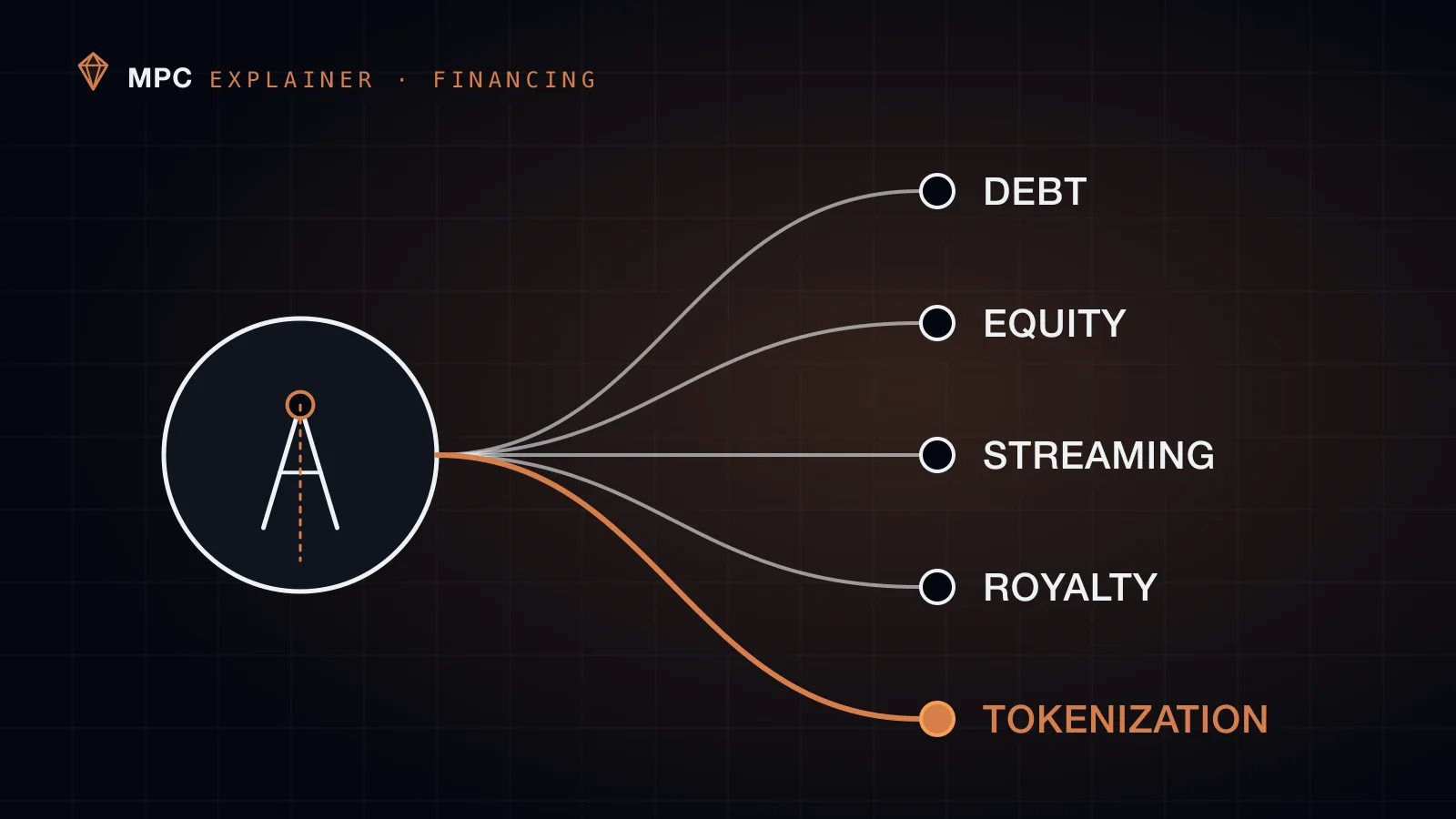
Mining projects need capital long before they produce revenue. This guide compares debt, equity, streaming, royalty and tokenization for mine operators, sets out where tokenization fits and where it does not, and gives a short checklist for judging whether your project documentation is ready for an initial review.
Mine financing options compared
Mining projects require substantial capital throughout exploration, development and production. Geological assessments, drilling programmes, laboratory testing, equipment procurement and operational expenses all create financial requirements, often before a project generates revenue.
Traditional mining finance involves several funding structures, each with different financial obligations and implications for project ownership. Understanding these alternatives helps operators determine which approach may fit their development stage and commercial objectives.
| Financing method | How it works | Key considerations |
|---|---|---|
| Debt financing | Borrowed capital from banks or private lenders, repaid with interest. | Repayment obligations, collateral and financial covenants. |
| Equity financing | Investors provide capital in exchange for company shares or ownership interests. | Ownership dilution, valuation and governance rights. |
| Streaming | An investor provides upfront capital in exchange for an agreement to purchase future mineral production at predetermined terms. | Future production commitments and commodity prices. |
| Royalty | An investor receives an agreed share of future project revenue or production. | Long-term economic obligations and production performance. |
| Tokenization | Verified mining project information is structured into digital records that may support on-chain issuance. | Legal structure, verification, technology and regulatory requirements. |
Understanding alternative financing structures
A conventional mining loan creates a repayment obligation. Equity financing can introduce capital without traditional loan repayments, but changes the company's ownership structure.
Other arrangements, such as a royalty or streaming agreement, exchange contractual rights over future production or revenue for upfront capital. Many projects combine debt, equity and streaming depending on their development stage. Offtake vs Royalty vs Streaming compares these contracts in more detail.
Junior mining companies face different challenges because exploration companies often have limited operating revenue while facing substantial geological and development uncertainty. Each structure also determines how investors participate in a project and what economic rights they receive.
Where tokenization fits, and where it does not
Whether a mine can be tokenized depends on the underlying asset, its legal structure, the available evidence, regulatory requirements and issuance arrangements.
Mining asset tokenization connects physical mining projects with verified information and structured digital records that can support potential on-chain issuance.
Unlike streaming and royalty agreements, which establish contractual claims over future production or revenue, tokenization creates a digital representation of legally defined asset interests. The rights associated with any issued token depend on its specific legal and commercial structure.
Tokenization does not automatically provide capital, guarantee investor participation or replace existing financing arrangements. It still requires appropriate commercial structures and counterparties, and it sits alongside equity, strategic partnerships, debt, royalties and streaming rather than replacing them.
Mining tokenization readiness checklist
Before contacting MPC about a project, it helps to know which documents and supporting information are already available. This checklist gives a preliminary view of documentation completeness and the gaps to close first.
Score each question 2, 1 or 0, choosing the answer that best describes your current documentation.
1. Project identity and licence information. Do you have identifiable project details and relevant licence or permit documentation?
- 2 points: complete project details and supporting licence records.
- 1 point: project details available, but some documentation is missing.
- 0 points: project information has not been organised.
2. Geological and exploration data. What physical mining information is available?
- 2 points: geological records, drilling information and sampling data.
- 1 point: some exploration information is available.
- 0 points: no organised exploration records.
3. Laboratory and technical reports. Do you have laboratory results, assay certificates or existing technical reports?
- 2 points: technical reports and supporting laboratory documentation.
- 1 point: partial reports or individual laboratory records.
- 0 points: no technical documentation available.
4. Legal and ownership information. Can you establish your relationship with the project and your authority to submit its information?
- 2 points: relevant rights and submission authority are documented.
- 1 point: documentation is being reviewed or prepared.
- 0 points: ownership or submission authority remains unclear.
5. Document organisation and traceability. Are your project documents organised with identifiable sources, dates and versions?
- 2 points: documents are organised and their sources can be identified.
- 1 point: some documents are organised, but records remain incomplete.
- 0 points: documentation is fragmented or difficult to trace.
Your readiness summary
Add your scores from all five questions. The maximum score is 10.
| Score | Preliminary assessment |
|---|---|
| 8 to 10 | Well prepared for an initial project review. |
| 5 to 7 | Partially prepared. Additional documentation may be required. |
| 0 to 4 | Early preparation stage. Organise available project information before proceeding. |
This checklist evaluates documentation completeness only. It does not establish mineral resources, confirm ownership, determine economic viability or guarantee financing or tokenization. Any question you scored 0 or 1 is a documentation priority. What a Mining Project Needs Before Tokenization describes each document group in more detail.
How MPC works with operators
MPC is building infrastructure designed to connect physical mining project information with professional verification, structured digital records and potential blockchain-based issuance. Its framework follows four stages. The whitepaper chapter Industry Problem describes the gaps in mining project records that this process addresses.
Verify
The process begins with available mining project information, including geological records, drilling data, laboratory results, licences and technical reports.
Relevant professionals review the information within their respective areas of expertise. Verification records are designed to identify the source, reviewing party, methodology and scope of each assessment.
Technical reports prepared under recognised frameworks such as NI 43-101 or JORC can provide additional supporting evidence where available and applicable.
Structure
Following verification, project information is organised into structured digital records.
The infrastructure connects source documents, verification results, responsible parties and document versions. This creates a more consistent information foundation for institutional assessment and potential asset structuring.
Tokenize
Eligible mining assets may progress toward digital representation and potential on-chain issuance once the necessary legal, technical and regulatory requirements are met.
$MPC is designed for BNB Smart Chain. The network for any asset token depends on that asset's structure and implementation.
As of 19 November 2026, $MPC remains at the Pre-TGE stage, and no token contract address has been published.
Manage
Mining information continues to evolve throughout exploration, development and production.
MPC's planned Registry infrastructure is designed to maintain project records, document updates, verification history and digital references over time, so that projects are supported beyond their initial submission and verification stages. Mining Asset Tokenization covers the four stages in more detail.
Reference case: Tsagaan Tolgoi
Tsagaan Tolgoi, Mongolia, is MPC's first mining reference case. It demonstrates how exploration-stage information can be documented and organised within the proposed MPC infrastructure.
Published materials include exploration observations, drilling information, laboratory analysis and geological documentation.
The project remains at the exploration stage. Its exploration licence XV-022460 is held by an independent licence holder. Commercial production has not started, and no JORC- or other CRIRSCO-compliant mineral resource or reserve report has been issued.
Explore the Tsagaan Tolgoi reference case and the MPC Tsagaan Tolgoi Reference Case article. Further project information is available in Updates, including the Tsagaan Tolgoi gold mineralization field update.
These materials demonstrate the documentation process. They do not represent completed tokenization, secured financing or commercial production.
Limits and risks
Mining project verification and digital asset infrastructure have defined limitations.
Verification does not guarantee geological accuracy beyond the scope of the review, mineral ownership, commercial viability, regulatory approval or access to capital.
Tokenization also does not automatically create liquidity or guarantee investor participation. The legal rights represented by a digital token must be established through the relevant agreements and asset structure.
MPC is building infrastructure for verification, structuring, tokenization and management. It does not operate as a mine lender or guarantee mining finance arrangements.
Operators should independently assess geological, legal, operational, technical and financial risks before pursuing any financing or issuance structure.
Talking to MPC about your project
After reviewing your documentation with the checklist, the next step is an initial screening.
MPC welcomes enquiries from mining companies, exploration operators, mineral rights holders and authorised project sponsors. Use the contact form and choose Project submission. Give the project name, jurisdiction, commodity, development stage and a short overview of the data you have. Do not send confidential documents with the first message; confidential materials are exchanged only under a separate NDA.
FAQs
Can tokenization be used to finance a mine?
It is an emerging route alongside debt, equity, streaming and royalty deals. MPC is building the infrastructure to verify and structure project data for potential on-chain issuance. It does not guarantee financing.
What does a mine operator need before tokenizing a project?
Verifiable project data and technical reports. The readiness checklist on this page shows what is in place and what is missing.
How is tokenization different from a streaming or royalty deal?
Streaming and royalty deals are private contracts over future production or revenue. Tokenization represents legally defined asset interests through digital tokens, built on structured records of verified project data.
What stage of project can apply?
Exploration-stage projects can be screened; the Tsagaan Tolgoi reference case documents one. The full sequence is in the whitepaper chapter Mining RWA Lifecycle.
Does MPC lend money to mines?
No. MPC is building infrastructure for verification, structuring, tokenization and management of mining project data.
MPC Team, globalMPC
November 18, 2026